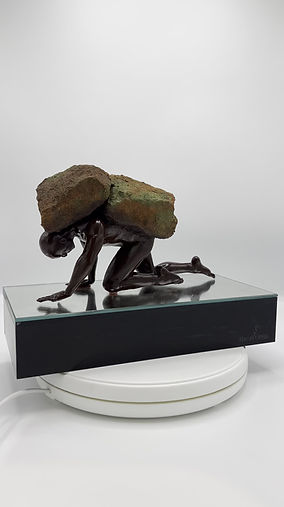
TRANSITION
Incomplete Integrity
The Aesthetics of Fragmented Unity
The Aesthetics of Fragmented Unity
Since the dawn of existence, humanity has sought wholeness. In mythologies, we yearn to merge with the gods; in religions, we seek eternal peace; and in philosophy, we strive to grasp the ultimate truth. Yet, this very desire points toward a lack. Everything that seeks completion first reveals its own deficiency. "Incomplete Integrity" is born exactly at this intersection: a paradoxical and poetic space where something can be simultaneously lacking and yet whole.
This concept carries not just a contradiction, but the very essence of being human. For we are incomplete beings—constantly changing, transforming, and searching... Always slightly deficient, yet near enough to the "whole" to be considered complete.
Integrity Born of Deficiency
In philosophy, deficiency is often perceived as a negative void. Yet, lack is the inaugural step of creation. In Plato’s Symposium, the notion of humans being split in two and searching for their other half symbolizes the yearning for wholeness born of deficiency. In Lacanian psychoanalysis, the subject is perpetually driven by the desire to "be something else"—a desire that serves as both the source of transition and the driving force of the subject.
In art and aesthetics, deficiency grants space to the observer. The voids are filled through interpretation. It is the viewer’s task to complete the unity. That which is missing is the living, breathing side of art. Therefore, "incomplete integrity" is not merely a state of being, but a method: an unfinished form achieves wholeness only through its union with the observer.

TRANSITION